

What are the main components of an Upscale Beam Dyeing Machine?
Jun 16, 2025
As a seasoned supplier of upscale beam dyeing machines, I've witnessed firsthand the transformative impact these machines have on the textile industry. In this blog post, I'll delve into the main components of an upscale beam dyeing machine, shedding light on their functions and importance. Whether you're a textile manufacturer looking to upgrade your equipment or simply curious about the technology behind these machines, this guide will provide valuable insights.
1. Dyeing Vessel
The dyeing vessel is the heart of the beam dyeing machine. It is a large, cylindrical container where the actual dyeing process takes place. Made from high - quality stainless steel, it is designed to withstand high temperatures and pressures. The vessel's interior is smooth to prevent any damage to the fabric during the dyeing process. It has a precise volume capacity, which is carefully calibrated to ensure optimal dye - fabric ratio. This helps in achieving consistent and uniform dyeing results across different batches of fabric.
2. Beam Holder
The beam holder is a crucial component that secures the fabric beam in place within the dyeing vessel. It is engineered to hold the beam firmly, allowing for smooth rotation during the dyeing process. The design of the beam holder ensures that the fabric unwinds evenly from the beam, preventing any tangling or bunching. This is essential for achieving a uniform dye penetration throughout the fabric. Some advanced beam holders are adjustable, accommodating different beam sizes and weights, which adds to the machine's versatility.
3. Circulation System
The circulation system plays a vital role in the dyeing process. It consists of pumps, pipes, and valves that work together to circulate the dye liquor through the fabric. The pumps are powerful enough to ensure a high - speed and even flow of the dye liquor. This constant circulation helps in maintaining a uniform temperature and concentration of the dye throughout the vessel. The pipes are carefully designed to minimize any pressure drop, ensuring that the dye reaches every part of the fabric effectively. Valves are used to control the flow rate and direction of the dye liquor, allowing for precise adjustment according to the specific dyeing requirements.
4. Heating System
An efficient heating system is essential for achieving the desired dyeing temperature. Most upscale beam dyeing machines are equipped with either steam heating or electric heating systems. Steam heating systems are known for their quick and uniform heating capabilities. They can raise the temperature of the dye liquor rapidly, which is beneficial for certain types of dyes that require high - temperature dyeing processes. Electric heating systems, on the other hand, offer more precise temperature control. They are often used for delicate fabrics that require a more controlled heating environment. The heating system is usually integrated with a temperature sensor and a control unit to maintain a stable and accurate temperature throughout the dyeing process.
5. Control Panel
The control panel is the nerve center of the beam dyeing machine. It allows the operator to monitor and control various parameters of the dyeing process, such as temperature, pressure, circulation speed, and dyeing time. Modern control panels are equipped with advanced touch - screen interfaces, which are user - friendly and intuitive. They can store multiple dyeing recipes, enabling quick and easy recall for different fabric types and dyeing requirements. Some control panels also have remote monitoring capabilities, allowing operators to monitor the machine's performance from a distance. This feature is particularly useful for large - scale textile manufacturing facilities.
6. Filtration System
A high - quality filtration system is essential for maintaining the quality of the dye liquor. It removes any impurities, such as lint, dirt, and dye particles, from the dye liquor before it is recirculated. This helps in preventing any blockages in the pipes and pumps, as well as ensuring a clean and uniform dyeing result. The filtration system typically consists of multiple filters with different pore sizes, which can effectively capture particles of various sizes. Regular maintenance of the filtration system is necessary to ensure its optimal performance.
7. Cooling System
After the dyeing process is complete, the cooling system is used to rapidly lower the temperature of the fabric and the dye liquor. This is important for fixing the dye onto the fabric and preventing any further dye migration. The cooling system can use either water or air as a cooling medium. Water - cooled systems are generally more efficient and can cool the fabric more quickly. The cooling process is carefully controlled to avoid any thermal shock to the fabric, which could damage its structure.
8. Safety Features
Upscale beam dyeing machines are equipped with a range of safety features to protect the operators and the machine itself. These include pressure relief valves, temperature sensors, and emergency stop buttons. Pressure relief valves are designed to release excess pressure in the dyeing vessel, preventing any potential explosions. Temperature sensors continuously monitor the temperature inside the vessel and can automatically shut down the heating system if the temperature exceeds the safe limit. Emergency stop buttons are easily accessible and can be used to immediately halt the machine in case of any emergencies.
9. Automation and Software
In recent years, automation and software have become integral parts of upscale beam dyeing machines. Advanced software allows for precise control of all aspects of the dyeing process, from setting the initial parameters to monitoring the progress in real - time. It can also generate detailed reports on the dyeing process, including temperature profiles, dye consumption, and cycle times. This data can be used for quality control and process optimization. Some machines are even capable of self - diagnosis, detecting and alerting the operator about any potential issues before they cause significant problems.
Related Products
If you're interested in exploring other types of dyeing machines, we also offer a range of advanced models. Check out our Liquid Flow & Jet HT Dyeing Machine, Soft Flow & Jet Flow High Temperature Dyeing Machine, and High Temperature High Pressure Beam Dyeing Machine. These machines are designed to meet the diverse needs of the textile industry, offering high - performance and reliable dyeing solutions.

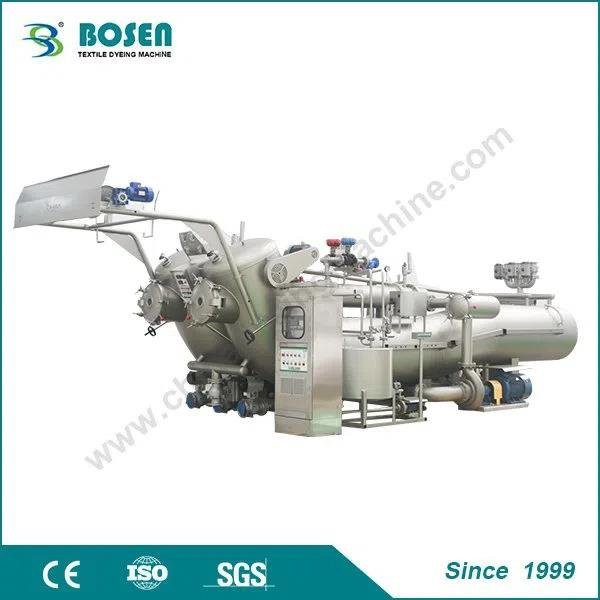
Conclusion
The main components of an upscale beam dyeing machine work together in a coordinated manner to ensure a high - quality and efficient dyeing process. Each component plays a specific role, from holding the fabric beam to circulating the dye liquor and controlling the temperature. As a supplier of these machines, we are committed to providing the latest technology and the highest quality components to our customers. If you're in the market for an upscale beam dyeing machine or have any questions about our products, we encourage you to reach out to us for a detailed discussion. Our team of experts is ready to assist you in finding the perfect solution for your textile dyeing needs.
References
- Textile Dyeing Machinery Handbook. [Publisher details if available]
- Journal of Textile Science and Technology, various issues related to dyeing machine technology.