

What are the regulations and standards for Warp Beam Dyeing Machines?
Aug 27, 2025
As a supplier of Warp Beam Dyeing Machines, I am often asked about the regulations and standards that govern these essential pieces of equipment in the textile industry. Understanding these regulations is crucial for both manufacturers and users to ensure product quality, safety, and environmental compliance. In this blog post, I will delve into the key regulations and standards for Warp Beam Dyeing Machines, providing valuable insights for those involved in the textile dyeing process.
International Safety Standards
One of the primary concerns when it comes to Warp Beam Dyeing Machines is safety. International safety standards play a vital role in ensuring that these machines are designed, manufactured, and operated in a way that minimizes the risk of accidents and injuries. The most widely recognized safety standard for industrial machinery is the ISO 12100, which provides general principles for the design and construction of machinery to ensure safety. This standard covers aspects such as risk assessment, safety requirements for machinery components, and safety-related control systems.
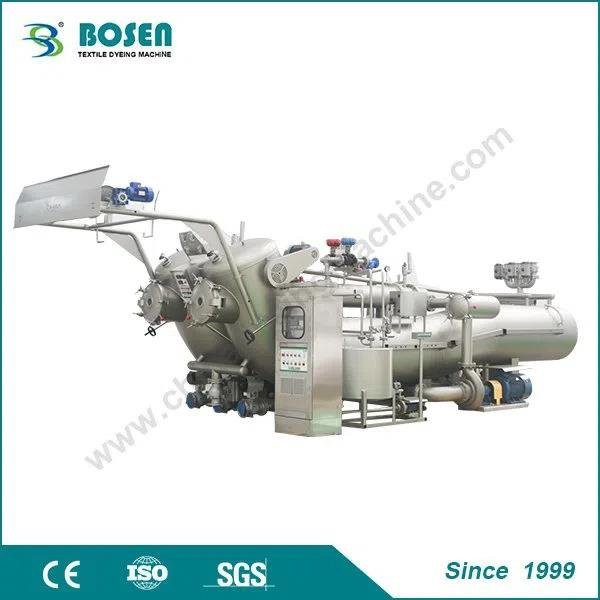

In addition to ISO 12100, there are specific safety standards for textile machinery, including Warp Beam Dyeing Machines. For example, the European Union's Machinery Directive (2006/42/EC) sets out essential health and safety requirements for machinery placed on the market in the EU. This directive requires manufacturers to ensure that their machines are safe to use, provide appropriate safety devices and markings, and comply with relevant harmonized standards. Compliance with the Machinery Directive is mandatory for manufacturers selling their products in the EU, and it is often used as a benchmark for safety in other regions as well.
Environmental Regulations
The textile dyeing process can have a significant impact on the environment, particularly in terms of water pollution and energy consumption. As a result, there are strict environmental regulations in place to govern the operation of Warp Beam Dyeing Machines and other textile dyeing equipment. These regulations aim to reduce the environmental footprint of the textile industry by promoting the use of sustainable practices and technologies.
One of the key environmental regulations for textile dyeing is the discharge of wastewater. Many countries have strict limits on the amount of pollutants that can be discharged into water bodies, including dyes, chemicals, and heavy metals. Warp Beam Dyeing Machines must be designed and operated in a way that minimizes the generation of wastewater and ensures that any wastewater produced is treated to meet the required standards before being discharged. This may involve the use of advanced water treatment technologies, such as filtration, reverse osmosis, and biological treatment.
Another important aspect of environmental regulation is energy efficiency. The textile dyeing process is energy-intensive, and reducing energy consumption is not only beneficial for the environment but also for the bottom line of textile manufacturers. Many countries have introduced energy efficiency standards and incentives to encourage the use of more energy-efficient equipment, including Warp Beam Dyeing Machines. These standards may include requirements for minimum energy efficiency levels, as well as guidelines for the design and operation of energy-efficient machines.
Quality Standards
In addition to safety and environmental regulations, there are also quality standards that govern the performance and reliability of Warp Beam Dyeing Machines. These standards ensure that the machines are capable of producing high-quality dyed fabrics that meet the requirements of the textile industry.
One of the key quality standards for textile dyeing is color fastness. Color fastness refers to the ability of a dyed fabric to retain its color when exposed to various environmental conditions, such as washing, light, and rubbing. Warp Beam Dyeing Machines must be designed and operated in a way that ensures consistent and uniform dyeing, resulting in fabrics with good color fastness properties. This may involve the use of advanced dyeing techniques, such as controlled temperature and pressure, as well as the selection of high-quality dyes and chemicals.
Another important quality standard is the uniformity of dyeing. Uniform dyeing is essential for producing high-quality fabrics with consistent color and appearance. Warp Beam Dyeing Machines must be designed to ensure that the dye is evenly distributed throughout the fabric, resulting in a uniform color across the entire width and length of the fabric. This may involve the use of advanced dyeing mechanisms, such as circulation pumps and nozzles, as well as the careful control of dyeing parameters, such as dye concentration, temperature, and time.
Our Product Range
At our company, we are committed to providing high-quality Warp Beam Dyeing Machines that meet the latest regulations and standards. Our product range includes Horizontal High Temperature Dyeing Machines, Soft Flow & Jet Flow High Temperature Dyeing Machine, and HTHP Beam Dyeing Machine. These machines are designed and manufactured using the latest technologies and materials, ensuring high performance, reliability, and energy efficiency.
Our Horizontal High Temperature Dyeing Machines are suitable for dyeing a wide range of fabrics, including cotton, polyester, and blended fabrics. These machines feature advanced circulation systems and temperature control mechanisms, ensuring uniform dyeing and excellent color fastness. The Soft Flow & Jet Flow High Temperature Dyeing Machine is designed for gentle dyeing of delicate fabrics, such as silk and wool. This machine uses a soft flow and jet flow dyeing system, which minimizes fabric damage and ensures high-quality dyeing results. The HTHP Beam Dyeing Machine is a high-pressure, high-temperature dyeing machine that is suitable for dyeing synthetic fibers, such as polyester and nylon. This machine features advanced pressure and temperature control systems, ensuring efficient and uniform dyeing.
Conclusion
In conclusion, the regulations and standards for Warp Beam Dyeing Machines are essential for ensuring product quality, safety, and environmental compliance. As a supplier of these machines, we understand the importance of meeting these regulations and standards, and we are committed to providing our customers with high-quality products that meet their needs. If you are in the market for a Warp Beam Dyeing Machine, we encourage you to contact us to discuss your requirements and learn more about our product range. We look forward to working with you to provide the best possible solution for your textile dyeing needs.
References
- ISO 12100:2010, Safety of machinery - General principles for design - Risk assessment and risk reduction
- Machinery Directive (2006/42/EC), European Union
- Environmental regulations for textile dyeing, various national and international sources