

What is the effect of the fabric's initial state on the dyeing in an Overflow Jet Dyeing Machine?
Nov 12, 2025
Hey there! As a supplier of Overflow Jet Dyeing Machines, I've seen firsthand how the fabric's initial state can have a huge impact on the dyeing process. In this blog, I'm gonna break down the key aspects of how the fabric's starting condition affects dyeing in an Overflow Jet Dyeing Machine.
1. Fabric Composition
The composition of the fabric is like the foundation of the dyeing process. Different fibers have different affinities for dyes. For example, natural fibers like cotton and silk are quite absorbent. Cotton has a lot of hydroxyl groups in its structure, which allows it to form hydrogen bonds with dye molecules. This means that when you put cotton fabric in an Overflow Jet Dyeing Machine, the dye can easily penetrate the fibers.
On the other hand, synthetic fibers such as polyester are more hydrophobic. They don't have the same natural attraction to water - based dyes as natural fibers do. To dye polyester effectively in an Overflow Jet Dyeing Machine, you often need to use special disperse dyes and apply heat. The heat helps to open up the tight molecular structure of polyester, allowing the dye to enter the fibers.
If you're dealing with a blend fabric, like a cotton - polyester blend, things get a bit more complicated. You need to find a dyeing process that can work well for both types of fibers. Our HTHP Double Tube Liquid Flow Dyeing Machine is great for handling blend fabrics because it can provide precise temperature and flow control, ensuring that each fiber type gets dyed evenly.
2. Fabric Moisture Content
The moisture content of the fabric before dyeing is another crucial factor. If the fabric is too dry, it can absorb the dye too quickly in the Overflow Jet Dyeing Machine. This rapid absorption can lead to uneven dyeing, with some areas of the fabric getting much darker than others.
Conversely, if the fabric is overly wet, the excess water can dilute the dye solution. This dilution can result in a lighter color than expected and may also cause problems with dye penetration. The ideal moisture content varies depending on the fabric type. For most natural fibers, a slightly damp state is often best.
Our machines are designed to handle different moisture levels. The Normal Temperature Overflow Dyeing Machine can adjust the flow and agitation of the dye solution to account for the fabric's moisture, ensuring a consistent dyeing result.
3. Fabric Surface Condition
The surface condition of the fabric can greatly influence dyeing. Fabrics with a smooth surface generally allow the dye to spread more evenly. The dye solution can flow over the surface easily, and there are fewer areas where the dye can get trapped or accumulate unevenly.
However, fabrics with a rough or textured surface, like tweed or corduroy, present more challenges. The dye may not penetrate into the deeper parts of the texture as easily, leading to uneven color distribution. In an Overflow Jet Dyeing Machine, you may need to increase the agitation and the dyeing time to ensure that the dye reaches all parts of the fabric.
Our HTHP Rapid Overflow Textile Dyeing Machine has advanced agitation systems that can effectively handle textured fabrics. It can create a strong and uniform flow of the dye solution, helping to achieve better dye penetration.
4. Fabric Tension
Fabric tension during the dyeing process is also important. If the fabric is too loose in the Overflow Jet Dyeing Machine, it can bunch up or tangle. This bunching can prevent the dye solution from reaching all parts of the fabric, resulting in uneven dyeing.
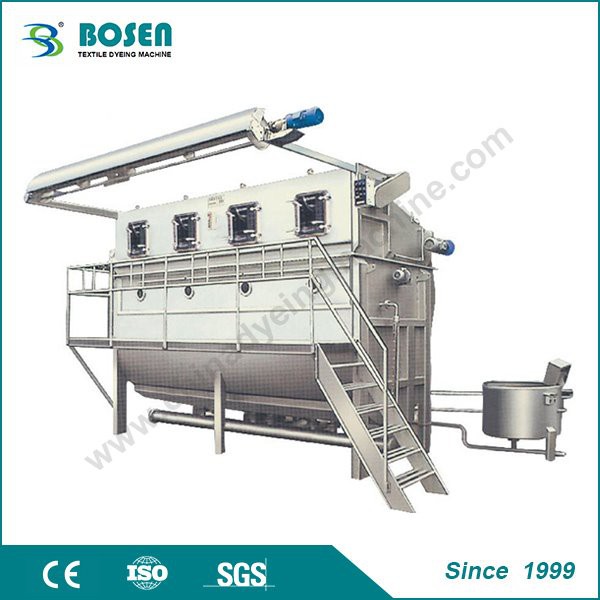

On the other hand, if the fabric is under too much tension, it can stretch. Stretched fabric may have a different dye - absorption rate compared to the normal state, and it can also cause problems with the fabric's dimensional stability after dyeing.
Our machines are equipped with tension - control systems. These systems ensure that the fabric maintains the right amount of tension throughout the dyeing process, leading to more consistent and high - quality dyeing results.
5. Pre - treatment of the Fabric
Pre - treatment of the fabric can significantly affect the dyeing outcome. For example, scouring is a common pre - treatment step. Scouring removes impurities such as dirt, oil, and sizing agents from the fabric surface. When these impurities are removed, the fabric becomes more receptive to the dye.
Bleaching is another pre - treatment that can change the fabric's initial state. Bleaching can lighten the fabric's color and make it more uniform, which is beneficial for achieving a consistent dye color.
If the pre - treatment is not done properly, it can leave residues on the fabric. These residues can interfere with the dyeing process, causing uneven dyeing or poor color fastness. Our team can provide guidance on the best pre - treatment methods for different fabric types to ensure optimal dyeing results in our Overflow Jet Dyeing Machines.
Conclusion
In conclusion, the fabric's initial state plays a vital role in the dyeing process in an Overflow Jet Dyeing Machine. From the fabric composition to its moisture content, surface condition, tension, and pre - treatment, each factor can either contribute to a successful dyeing process or cause problems.
As a supplier of high - quality Overflow Jet Dyeing Machines, we understand these challenges and have designed our machines to handle a wide range of fabric initial states. Whether you're working with natural fibers, synthetic fibers, or blends, our machines can provide precise control over the dyeing process.
If you're in the textile industry and looking for a reliable dyeing solution, we'd love to have a chat with you. Contact us to discuss your specific needs and let's work together to achieve the best dyeing results for your fabrics.
References
- Lewis, M. (2007). "Textile Coloration: Principles and Practice". Woodhead Publishing Limited.
- Shore, J. (2012). "Handbook of Textile Fibre Structure". Elsevier.