

What is the role of the heat exchanger in an Overflow Dyeing Machine?
Nov 17, 2025
Hey there! As a supplier of Overflow Dyeing Machines, I've been getting a lot of questions lately about the role of the heat exchanger in these machines. So, I thought I'd take a few minutes to break it down for you.
First off, let's talk about what an Overflow Dyeing Machine is. It's a piece of equipment used in the textile industry to dye fabrics. The basic idea is that the fabric is continuously circulated through a dye bath, and the dye is applied to the fabric as it moves through the machine. There are different types of Overflow Dyeing Machines, like the Industrial Fabric Jet Dyeing Machine, HTHP Double Tube Liquid Flow Dyeing Machine, and High Temperature and High Pressure Overflow Dyeing Machine. Each type has its own features and advantages, but they all rely on a heat exchanger to function properly.
So, what exactly is a heat exchanger? Well, it's a device that transfers heat from one fluid to another. In the context of an Overflow Dyeing Machine, the heat exchanger is used to control the temperature of the dye bath. You see, temperature plays a crucial role in the dyeing process. Different dyes require different temperatures to bond effectively with the fabric fibers. If the temperature is too low, the dye might not adhere properly, resulting in uneven color or poor color fastness. On the other hand, if the temperature is too high, it could damage the fabric or cause the dye to break down.
The heat exchanger in an Overflow Dyeing Machine typically consists of a series of tubes or plates. One fluid, usually steam or hot water, flows through one side of the heat exchanger, while the dye bath circulates on the other side. As the two fluids pass by each other, heat is transferred from the hot fluid to the dye bath, raising its temperature to the desired level.
One of the key functions of the heat exchanger is to maintain a consistent temperature throughout the dyeing process. This is important because any fluctuations in temperature can lead to variations in color. For example, if the temperature drops during the dyeing process, the dye might not fully penetrate the fabric, resulting in a lighter color in some areas. By using a heat exchanger, we can ensure that the dye bath stays at a steady temperature, which helps to achieve uniform color across the entire fabric.
Another important role of the heat exchanger is energy efficiency. In a large-scale textile dyeing operation, heating the dye bath can consume a significant amount of energy. A well-designed heat exchanger can help to reduce energy consumption by recovering heat from the hot dye bath as it exits the machine and using it to pre-heat the incoming cold water or dye solution. This not only saves energy but also reduces operating costs.
Let's take a closer look at how the heat exchanger works in a real-world scenario. When the Overflow Dyeing Machine is started, the heat exchanger begins to heat the dye bath to the initial set temperature. Once the desired temperature is reached, the heat exchanger continues to monitor and adjust the temperature as needed. As the fabric is dyed, the heat exchanger ensures that the temperature remains stable, even as the dye bath is constantly being circulated and new fabric is added.
In addition to temperature control, the heat exchanger also plays a role in the cleaning and maintenance of the Overflow Dyeing Machine. After each dyeing cycle, the machine needs to be cleaned to remove any residual dye or contaminants. The heat exchanger can be used to heat the cleaning solution, which helps to break down and remove these impurities more effectively.
Now, you might be wondering about the different types of heat exchangers used in Overflow Dyeing Machines. There are several common types, including shell and tube heat exchangers, plate heat exchangers, and spiral heat exchangers. Each type has its own advantages and disadvantages, and the choice of heat exchanger depends on factors such as the size of the machine, the type of dye being used, and the specific requirements of the dyeing process.
Shell and tube heat exchangers are one of the most widely used types in Overflow Dyeing Machines. They consist of a shell (a large outer tube) and a bundle of smaller tubes inside. The hot fluid flows through the tubes, while the dye bath circulates around the outside of the tubes. This design provides a large surface area for heat transfer, which allows for efficient heating of the dye bath.

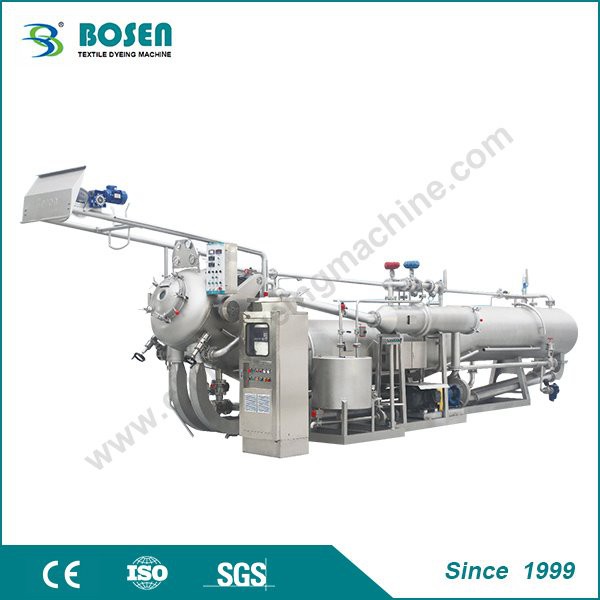
Plate heat exchangers, on the other hand, are made up of a series of thin plates that are stacked together. The hot and cold fluids flow through alternate channels between the plates, allowing for efficient heat transfer. Plate heat exchangers are known for their compact size and high heat transfer efficiency, making them a popular choice for smaller Overflow Dyeing Machines.
Spiral heat exchangers are less common but offer some unique advantages. They consist of two spiral-shaped channels that are separated by a thin wall. The hot and cold fluids flow through the channels in opposite directions, creating a counterflow pattern that maximizes heat transfer. Spiral heat exchangers are particularly well-suited for applications where the fluids have a high viscosity or contain suspended particles.
In conclusion, the heat exchanger is a vital component of an Overflow Dyeing Machine. It plays a crucial role in controlling the temperature of the dye bath, ensuring uniform color, and improving energy efficiency. Whether you're using an Industrial Fabric Jet Dyeing Machine, HTHP Double Tube Liquid Flow Dyeing Machine, or High Temperature and High Pressure Overflow Dyeing Machine, a high-quality heat exchanger is essential for achieving the best results.
If you're in the market for an Overflow Dyeing Machine or need to replace the heat exchanger in your existing machine, we'd love to help. We offer a wide range of high-quality Overflow Dyeing Machines and heat exchangers that are designed to meet the needs of different textile dyeing applications. Contact us today to learn more about our products and how we can help you improve your dyeing process.
References
- Textile Dyeing Technology Handbook
- Principles of Heat Transfer in Industrial Processes