

What is the speed of the fabric movement in an Upscale Beam Dyeing Machine?
May 28, 2025
In the dynamic world of textile manufacturing, the upscale beam dyeing machine stands as a cornerstone of efficiency and quality. One of the most critical aspects of this equipment is the speed of fabric movement, which directly impacts the dyeing process's effectiveness, consistency, and overall productivity. As a leading supplier of upscale beam dyeing machines, I am often asked about this crucial parameter. In this blog, we will delve into the intricacies of fabric movement speed in these machines, exploring its significance, influencing factors, and optimal settings.
The Significance of Fabric Movement Speed
The speed at which the fabric moves through an upscale beam dyeing machine is a fundamental determinant of the dyeing quality. It affects the distribution of the dye across the fabric, ensuring uniform color penetration and saturation. If the fabric moves too slowly, the dye may accumulate in certain areas, leading to uneven coloration and potential staining. On the other hand, if the speed is too high, the dye may not have sufficient time to bond with the fabric fibers, resulting in poor color fastness and a lack of vibrancy.
Moreover, the fabric movement speed also plays a vital role in the efficiency of the dyeing process. A well - calibrated speed can significantly reduce the dyeing time, increasing the overall throughput of the machine. This is particularly important in large - scale textile production, where time is of the essence, and any improvement in productivity can translate into substantial cost savings.
Factors Influencing Fabric Movement Speed
Several factors come into play when determining the appropriate fabric movement speed in an upscale beam dyeing machine.
Fabric Type
Different types of fabrics have distinct physical and chemical properties that influence how they interact with the dye. For example, natural fibers such as cotton and silk are more porous and absorbent than synthetic fibers like polyester and nylon. As a result, they may require a slower fabric movement speed to allow the dye to penetrate deeply into the fibers. In contrast, synthetic fabrics may be dyed at a relatively higher speed, as they are less absorbent and may not need as much time for the dye to bond.
Dye Type
The type of dye used also has a significant impact on the fabric movement speed. Reactive dyes, which form a chemical bond with the fabric fibers, typically require a slower speed to ensure proper fixation. Disperse dyes, commonly used for synthetic fabrics, may allow for a faster movement speed as they are designed to disperse evenly in the dye bath and adhere to the fibers.
Machine Design
The design and specifications of the upscale beam dyeing machine itself are crucial factors. Machines with advanced circulation systems and efficient dye delivery mechanisms can often accommodate higher fabric movement speeds. For instance, a machine with a powerful pump can ensure a consistent flow of dye, allowing the fabric to move more quickly through the dye bath without compromising the dyeing quality.
Optimal Fabric Movement Speed Settings
Determining the optimal fabric movement speed is a complex process that requires a combination of technical knowledge and practical experience. As a general rule, it is advisable to start with a conservative speed and gradually adjust it based on the results of test runs.
For most common fabrics and dyes, a fabric movement speed in the range of 10 - 30 meters per minute is a good starting point. However, this can vary significantly depending on the specific requirements of the dyeing process. For example, when dyeing delicate or high - end fabrics, a slower speed of around 5 - 10 meters per minute may be necessary to ensure the highest quality results.
It is also important to note that the fabric movement speed may need to be adjusted throughout the dyeing process. For instance, during the initial stages of dyeing, a slower speed may be used to allow the dye to penetrate the fabric evenly. As the dyeing progresses, the speed can be gradually increased to improve efficiency.
Our Upscale Beam Dyeing Machines
At our company, we offer a range of upscale beam dyeing machines that are designed to provide precise control over the fabric movement speed. Our Soft Flow & Jet Flow High Temperature Dyeing Machine combines advanced soft flow and jet flow technologies, allowing for efficient and uniform dyeing. The machine is equipped with a state - of - the - art control system that enables operators to adjust the fabric movement speed accurately, ensuring optimal dyeing results for a wide variety of fabrics.
Our High Temperature Beam Dyeing Machine is specifically designed for high - temperature dyeing processes. It features a robust construction and a high - performance heating system, which can maintain a stable temperature throughout the dyeing process. The fabric movement speed can be adjusted to suit the specific requirements of high - temperature dyeing, ensuring excellent color fastness and quality.

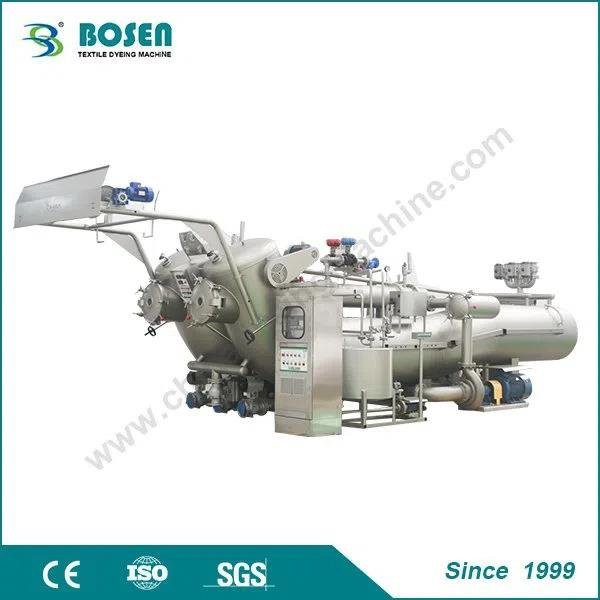
In addition, our Warp Beam Dyeing Machine is ideal for dyeing warp beams. It offers a high - speed fabric movement option while still maintaining excellent dyeing uniformity. The machine is designed with a large - capacity dye bath and an efficient circulation system, which can handle large - scale dyeing operations with ease.
Conclusion
The speed of fabric movement in an upscale beam dyeing machine is a critical factor that can significantly impact the dyeing quality and efficiency. By understanding the factors that influence this speed and setting it optimally, textile manufacturers can achieve consistent, high - quality dyeing results.
As a trusted supplier of upscale beam dyeing machines, we are committed to providing our customers with the best - in - class equipment and technical support. Our machines are designed to offer precise control over the fabric movement speed, ensuring that you can achieve the perfect balance between quality and productivity.
If you are interested in learning more about our upscale beam dyeing machines or have any questions regarding fabric movement speed, please feel free to contact us. We look forward to the opportunity to discuss your specific needs and help you find the most suitable solution for your textile dyeing operations.
References
- Textile Dyeing Handbook: Principles, Processes, and Machines.
- Journal of Textile Science and Technology: Studies on Dyeing Process Optimization.
- International Textile Manufacturer Federation Reports on Dyeing Technology Advancements.