

What are the factors affecting the dyeing quality in a Warp Beam Dyeing Machine?
Jun 03, 2025
Hey there! As a supplier of Warp Beam Dyeing Machines, I've seen firsthand the importance of getting the dyeing quality just right. In this blog, I'm gonna break down the factors that can affect the dyeing quality in a Warp Beam Dyeing Machine.
1. Dye Selection
First off, the type of dye you choose plays a huge role. Different dyes have different properties, like solubility, affinity for the fabric, and fastness. For example, reactive dyes are great for cotton and other cellulosic fibers because they form a chemical bond with the fiber molecules. This results in good color fastness and bright colors. But they need specific pH and temperature conditions to work properly.
On the other hand, disperse dyes are mainly used for synthetic fibers like polyester. They have low solubility in water, so they need a carrier or a high - temperature process to penetrate the fiber. If you pick the wrong dye for your fabric, you'll end up with poor color uptake, uneven dyeing, or low color fastness.
When you're considering dye selection, it's also important to think about environmental and safety factors. Some dyes contain heavy metals or other harmful substances, which are not only bad for the environment but also for the workers handling them. So, make sure to choose eco - friendly dyes whenever possible. You can check out our Soft Flow & Jet Flow High Temperature Dyeing Machine which is designed to work well with a variety of dyes, including the more environmentally friendly ones.
2. Fabric Preparation
Before the dyeing process, the fabric needs to be properly prepared. This includes desizing, scouring, and bleaching. Desizing removes the sizing agents that were applied to the yarn during weaving to protect it. If these sizing agents are not removed, they can prevent the dye from penetrating the fiber evenly.
Scouring is the process of removing impurities like oils, waxes, and dirt from the fabric. These impurities can also act as barriers to dye penetration. Bleaching is often done to whiten the fabric and improve its absorbency. A well - bleached fabric will have a more uniform surface for dyeing, resulting in better color consistency.
The quality of fabric preparation can vary depending on the type of fabric. For example, natural fibers like cotton and wool may require more intensive preparation compared to synthetic fibers. If the fabric preparation is not done correctly, you may notice issues such as color streaks, spots, or uneven color intensity. Our Hthp Beam Dyeing Machine For Fabric is suitable for fabrics that have undergone proper preparation, ensuring better dyeing results.
3. Machine Design and Operation
The design and operation of the Warp Beam Dyeing Machine itself are crucial factors. The machine should be able to provide uniform flow of the dye liquor through the warp beam. If the flow is uneven, some parts of the fabric may receive more dye than others, leading to uneven color.
The temperature control of the machine is also very important. Different dyes require different temperature ranges for optimal dyeing. For example, some dyes need high temperatures to dissolve and penetrate the fiber, while others may degrade at high temperatures. A good machine should be able to maintain a stable temperature throughout the dyeing process.
The pressure inside the machine can affect the dyeing quality as well. Higher pressure can help the dye liquor penetrate the fabric more effectively, especially for tightly woven fabrics. However, too much pressure can damage the fabric.
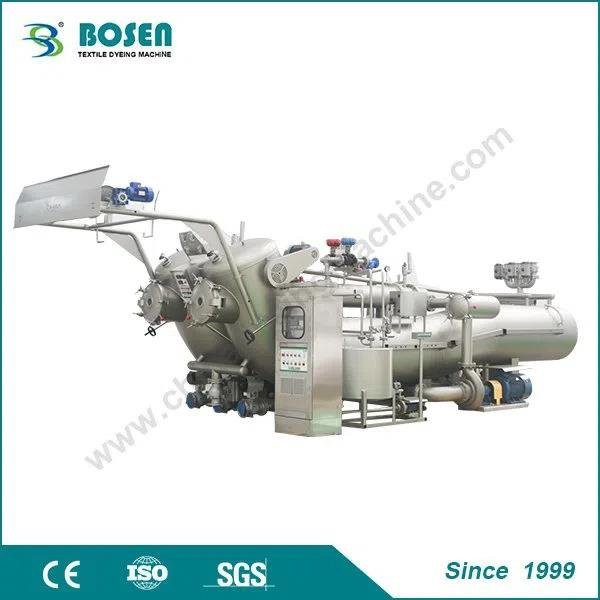
Our Horizontal High Temperature Dyeing Machines are designed with advanced features to ensure uniform flow, precise temperature control, and appropriate pressure settings. This helps to achieve high - quality dyeing results.
4. Dyeing Process Parameters
There are several process parameters that need to be carefully controlled during the dyeing process. The dyeing time is one of them. If the dyeing time is too short, the dye may not have enough time to penetrate the fiber fully, resulting in light colors and poor color fastness. On the other hand, if the dyeing time is too long, it can cause over - dyeing, color bleeding, or damage to the fabric.
The pH value of the dye liquor is another important parameter. Different dyes have different pH requirements for optimal dyeing. For example, reactive dyes usually work best in an alkaline environment, while acid dyes work better in an acidic environment. If the pH is not adjusted correctly, the dye may not react properly with the fiber, leading to poor color uptake.
The liquor ratio, which is the ratio of the weight of the fabric to the volume of the dye liquor, also affects the dyeing quality. A high liquor ratio means there is more dye liquor relative to the fabric, which can result in more even dyeing. However, it also means more dye and water are used, which can be costly and less environmentally friendly. A low liquor ratio can save resources, but it may be more challenging to achieve uniform dyeing.

5. Water Quality
The quality of the water used in the dyeing process can't be overlooked. Water contains various impurities such as minerals, salts, and microorganisms. Hard water, which contains high levels of calcium and magnesium ions, can react with the dye and form insoluble precipitates. These precipitates can cause uneven dyeing, color spots, or reduce the effectiveness of the dye.
Microorganisms in the water can also cause problems. They can grow in the dye liquor and produce enzymes that can break down the dye or damage the fabric. Therefore, it's important to use treated water in the dyeing process. Water treatment methods such as filtration, ion exchange, and reverse osmosis can help remove impurities and ensure the quality of the dye liquor.
6. Operator Skill and Training
Last but not least, the skill and training of the machine operator are vital. An experienced operator knows how to adjust the machine settings, monitor the process parameters, and troubleshoot problems. They can also make quick decisions in case of unexpected situations, such as a sudden change in temperature or pressure.
Proper training is essential for operators to understand the principles of dyeing, the operation of the machine, and the importance of quality control. Without well - trained operators, even the best - designed machines and the highest - quality dyes may not be able to produce consistent, high - quality dyeing results.
In conclusion, there are many factors that can affect the dyeing quality in a Warp Beam Dyeing Machine. From dye selection and fabric preparation to machine design, process parameters, water quality, and operator skill. As a supplier of Warp Beam Dyeing Machines, we understand the importance of all these factors and are committed to providing you with the best - in - class machines and support.
If you're interested in improving your dyeing quality or looking for a reliable Warp Beam Dyeing Machine, feel free to reach out to us for a detailed discussion and to start the procurement process. We're here to help you achieve the best results in your textile dyeing operations.
References
- Textile Dyeing and Finishing Handbook, Third Edition
- Fundamentals of Textile Coloration by Dr. P. K. Chattopadhyay