

What is the effect of fabric density on the dyeing process of an Airflow Jet Dyeing Machine?
Jul 08, 2025
Hey there! As a supplier of Airflow Jet Dyeing Machines, I've been getting a lot of questions lately about how fabric density affects the dyeing process in our machines. So, I thought I'd take a moment to share some insights on this topic.
First off, let's talk about what fabric density is. Simply put, fabric density refers to the number of yarns per unit area in a fabric. It's usually measured in terms of the number of warp and weft yarns per square inch or centimeter. A fabric with a high density has more yarns packed closely together, while a low - density fabric has fewer yarns with more space between them.
Now, how does this density impact the dyeing process in an Airflow Jet Dyeing Machine?
1. Penetration of Dye
One of the most significant effects of fabric density is on the penetration of the dye into the fabric. In an Airflow Jet Dyeing Machine, the dye is carried by an airflow through the fabric. For low - density fabrics, the dye can penetrate more easily. Since there are fewer yarns and more open spaces, the airflow can carry the dye particles through the fabric structure with less resistance. This means that the dye can reach the inner layers of the fabric more quickly, resulting in a more even and faster dyeing process.
On the other hand, high - density fabrics pose a challenge. The tightly packed yarns act as a barrier to the dye penetration. The airflow has to work harder to push the dye through the fabric. As a result, it may take longer for the dye to reach the center of the fabric, and there's a higher risk of uneven dyeing. To overcome this, we might need to adjust the dyeing parameters such as the airflow pressure and the dyeing time in our Airflow Jet Dyeing Machines.
2. Dye Uptake
Fabric density also affects the amount of dye that the fabric can take up. Low - density fabrics generally have a lower dye uptake capacity. This is because there is less surface area of the yarns available for the dye to attach to. With fewer yarns, there are fewer active sites for the dye molecules to bind. So, even though the dye can penetrate easily, the overall amount of dye that the fabric can hold is limited.
In contrast, high - density fabrics have a higher dye uptake potential. The large number of yarns provides a greater surface area for the dye to adhere to. However, as mentioned earlier, getting the dye to penetrate these fabrics can be difficult. If we manage to ensure proper penetration, high - density fabrics can achieve a more intense and rich color.
3. Dyeing Uniformity
Achieving uniform dyeing is crucial in the textile industry. Fabric density plays a key role in this aspect. In low - density fabrics, because of the easy dye penetration, it's usually easier to get a uniform color across the fabric. The dye can spread evenly throughout the fabric structure.
But for high - density fabrics, achieving uniformity is a real headache. The uneven penetration of the dye can lead to color variations within the fabric. Darker colors may appear on the surface, while the inner layers may be lighter. To address this, we often use our Airflow Jet Dyeing Machines' advanced features. For example, some of our machines are equipped with adjustable nozzles that can control the airflow and dye distribution more precisely. This helps to improve the dyeing uniformity, even for high - density fabrics.
4. Energy Consumption
Fabric density also has an impact on the energy consumption during the dyeing process. Dyeing high - density fabrics in an Airflow Jet Dyeing Machine typically requires more energy. Since the dye has a harder time penetrating the fabric, we need to increase the airflow pressure and run the machine for a longer time. This means more energy is used to operate the fans and other components of the machine.
For low - density fabrics, the energy consumption is relatively lower. The dye can penetrate quickly, so we can use lower airflow pressures and shorter dyeing times, which saves energy.
Now, let me introduce some of our other great products. If you're interested in different types of dyeing machines, we also have the GBM Serial beam Dyeing Machine. This machine is designed for beam dyeing and offers high - quality and efficient dyeing solutions.
Another option is the GYS - HOF Soft Flow & Jet Flow High Temperature Dyeing Machine. It combines soft flow and jet flow technologies, which is suitable for a wide range of fabrics, including both low - and high - density ones.
And we also have the GYX - F Soft Flow & jet Flow High Temperature Dyeing Machine. This machine provides excellent performance in high - temperature dyeing processes.

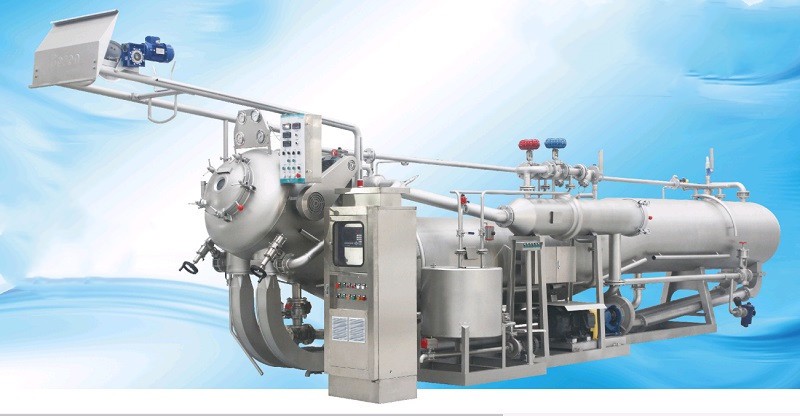
If you're in the textile industry and looking for reliable and efficient dyeing machines, we're here to help. Understanding the effect of fabric density on the dyeing process is just one part of the equation. Our machines are designed to handle different fabric densities with optimal results. Whether you're dealing with low - density or high - density fabrics, our Airflow Jet Dyeing Machines and other products can meet your needs.
If you're interested in learning more about our products or have any questions regarding the dyeing process, feel free to reach out to us. We'd be more than happy to have a detailed discussion with you and help you find the best dyeing solutions for your business.
References
- Textile Dyeing Handbook, Second Edition, by W. S. C. Grimshaw
- Fundamentals of Textile Dyeing by P. A. Trotman